
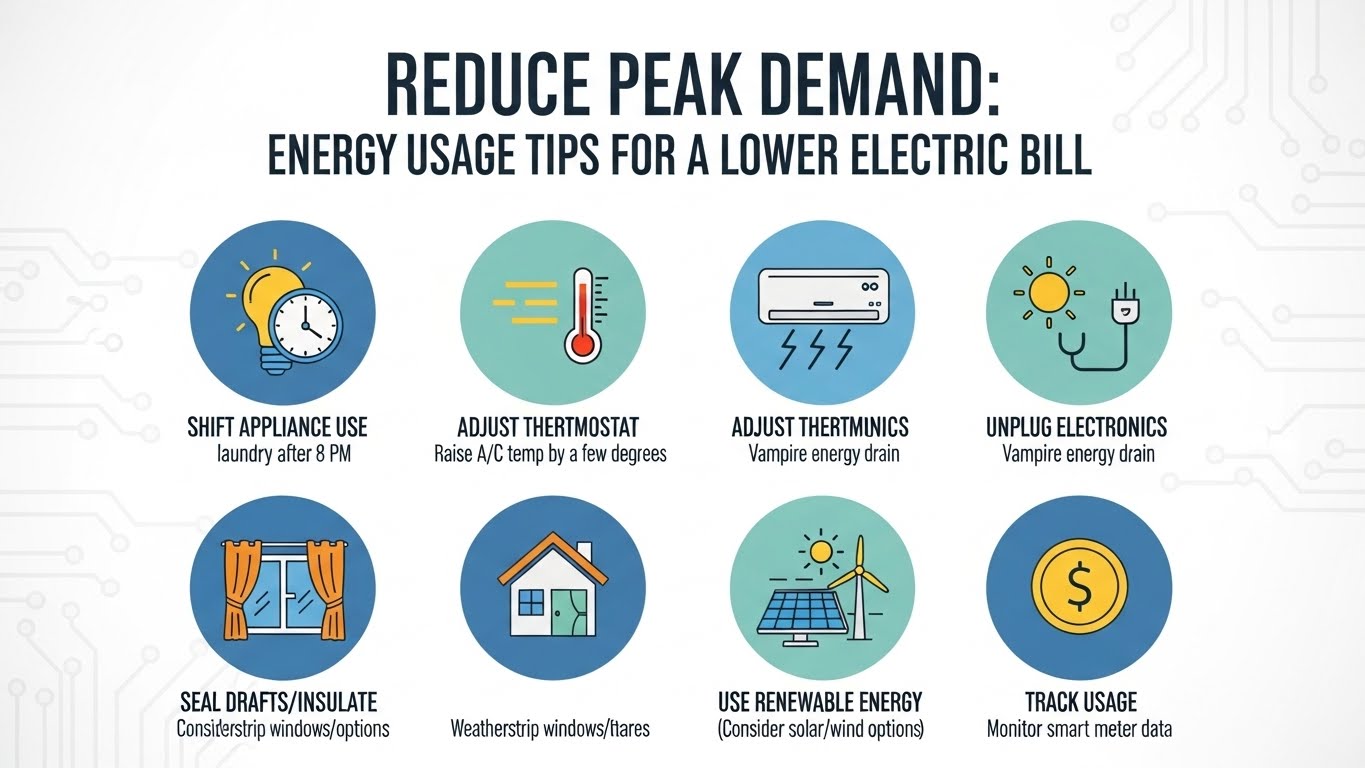
Here are some actionable tips to help you reduce peak demand and save money, focusing on strategies such as:
- Understanding peak times.
- Shifting your energy consumption to off-peak hours.
By implementing these strategies, you can significantly lower your electric bill and contribute to a more stable and clean energy future.
Understanding Peak Demand and Energy Usage

What is Peak Demand?
Peak demand refers to the period when electricity use is at its highest, typically during specific peak hours of the day. This high demand puts a strain on the electric grid, often requiring electric cooperative companies to activate additional, more expensive power sources to meet the surge. Managing peak demand is crucial for maintaining a stable electric grid.
How Peak Demand Affects Your Electric Bill
During peak times, the amount of power needed drives up energy costs. Many electric bills are calculated based on several factors, including:
- The amount of energy you use.
- Your highest power demand during peak hours.
By reducing electricity use during these critical times, you can lower your energy bills and contribute to saving energy overall. Understanding this connection is key to effective energy management.
Factors Influencing Peak Hours
Several factors influence peak hours. These can include:
- Weather conditions
- Time of day
- Seasonal changes
For example, hot summer afternoons often see increased energy usage due to air conditioning, while evenings may experience a surge as people return home and use energy for cooking and entertainment. Smart energy management involves understanding these patterns and adjusting your appliance use accordingly, shifting usage outside of peak hours.
Strategies to Reduce Peak Demand

Implementing Peak Shaving Techniques
Peak shaving is a powerful strategy to reduce peak demand by strategically decreasing energy use during peak times. This involves temporarily reducing electricity use from the electric grid, either through energy storage solutions or by shifting energy consumption to off-peak hours. By adopting peak shaving, you can significantly lower your electricity bills and alleviate strain on the electric grid when the demand for power is highest.
Utilizing Off-Peak Hours for Energy Consumption
One of the most effective ways to reduce peak demand is to shift your energy consumption to off-peak hours. Many electric cooperative companies offer time-of-use electricity bills, where energy costs are lower during off-peak times. By running major appliances like your dishwasher, washing machine, and dryer during these times, you can save a significant amount of energy and lower your utility bill. For example, consider running these items late at night or early in the morning to take advantage of energy during off-peak hours.

Adjusting Thermostat Settings for Savings
Adjusting your thermostat settings can substantially impact your energy usage and help reduce peak demand. During peak hours, setting your thermostat a few degrees higher in the summer or lower in the winter can significantly decrease the load on your HVAC system. Programmable or smart thermostat devices can automate these adjustments, ensuring you’re not using energy unnecessarily during peak times. This simple change contributes to saving energy and lowering your electric bill.
Energy-Efficient Appliances and Their Role
Choosing Energy-Efficient Water Heaters
Your water heater is a significant energy consumer in most homes. Upgrading to an energy-efficient water heater can substantially reduce peak demand. Consider models with better insulation or tankless water heater options that only heat water on demand. By choosing an energy efficiency model, you reduce the amount of energy needed and contribute to overall home energy conservation.
Smart Thermostats for Reduced Energy Usage
Smart thermostats are a powerful tool for energy management and reducing electricity use during peak hours. These devices learn your heating and cooling patterns and automatically adjust the temperature to optimize energy consumption. Many smart thermostat models can also be controlled remotely via a smartphone, allowing you to adjust settings even when you’re not home. Investing in a smart thermostat is a smart move for anyone serious about saving energy and reducing their electric bill.
Managing Dishwasher Use During Off-Peak Hours
Your dishwasher, like other major appliances, contributes to peak demand when using electricity during peak times. To mitigate this, always aim to run your dishwasher during off-peak hours. Many modern dishwasher models also have energy-saving settings that use less water and energy. By planning your dishwasher use, you can contribute to reducing electricity use and lowering your electric bill. This simple shift helps to promote clean energy.
For further insights into energy efficiency and peak demand reduction strategies, explore resources from the U.S. Department of Energy: Energy.gov.
Electric Vehicles and Peak Demand Management
Charging Your Electric Vehicle Efficiently
Electric vehicles (EVs) present both a challenge and an opportunity for peak demand management. While they offer a clean energy alternative to gasoline cars, the amount of power required to charge them can strain the electric grid, especially during peak hours. To reduce peak demand, it’s crucial to charge your electric vehicle during off-peak hours, leveraging time-of-use rates offered by your electric cooperative. Many smart thermostat systems can be integrated with EV chargers to automatically schedule charging during off-peak times.
Integrating Energy Storage Solutions
Energy storage solutions, such as batteries, play a vital role in reducing peak demand. By storing energy during off-peak hours, you can then use energy from the battery during peak times, effectively peak shaving your energy consumption. This approach not only lowers your electricity bills but also supports the stability of the electric grid by alleviating high demand. Home energy storage systems are becoming increasingly affordable, making them a viable option for managing energy usage.
Understanding Electricity Rates and Their Impact
Understanding your electricity bills structure is essential for effective energy management. Many electric cooperative companies offer time-of-use rates, where energy costs vary depending on the time of day. During peak hours, rates are higher to reflect the increased demand for power on the electric grid. By shifting your energy consumption to off-peak hours, you can take advantage of lower rates and reduce peak demand, ultimately saving energy and lowering your utility bill.
FAQs on Reducing Electricity Use
What are peak hours for electricity use?
Peak hours are the times of day when electricity use is at its highest, generally in the late afternoon and early evening.
How can I effectively reduce my electric bill?
To effectively reduce your electric bill, reduce peak demand by shifting energy consumption to off-peak hours, use energy-efficient appliances, and adjust your thermostat settings.
What is peak shaving and how does it work?
Peak shaving is a strategy to reduce peak demand by decreasing energy use during peak times, often through energy storage or shifting appliance use to outside of peak hours.